Why Farm-Sourced Skincare Matters for Your Skin
Farm-sourced skincare delivers ingredients nurtured from soil to skin with intention and care. At Ewe Lather Me, we've built our approach around a core principle: soil health directly influences the nourishment your skin receives.
Farm-sourced skincare prioritises ingredient quality at every stage, sourcing from plants and animals raised to support natural nutrient density. Your skin absorbs what you apply, and absorption depends on ingredient bioavailability.
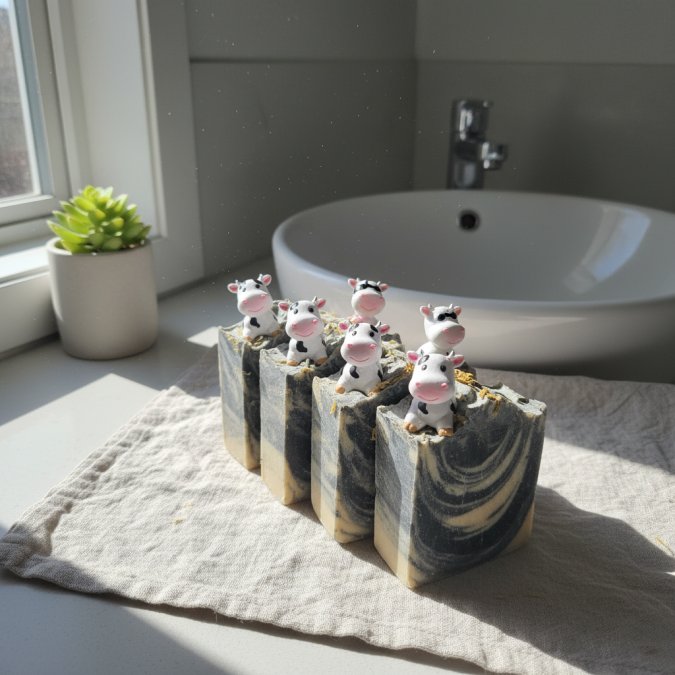
People with sensitive skin, eczema, or psoriasis often report fewer reactions to farm-sourced products because they contain no synthetic fragrances, endocrine disruptors, or shelf-stability additives, removing industrial chemicals removes irritants.
The Benefits of Tallow Skincare
Tallow from grass-fed animals mirrors human skin's lipid profile, absorbing deeply rather than sitting on the surface, transformative for dry skin.
Tallow contains fat-soluble vitamins A, D, E, and K in forms your skin recognises immediately, plus conjugated linoleic acid (CLA), an antioxidant supporting skin's natural repair, all naturally present from pasture-raised animals.
Tallow absorbs without residue because its lipid chemistry aligns with skin's barrier function. Users often need less product overall because it nourishes rather than coats.
Soil Health Directly Affects Skin Health
Plants grown in biodiverse, living soil develop stronger antioxidant profiles and richer phytochemical content than those in depleted, chemically-managed soil (pubmed.ncbi.nlm.nih.gov).
Regenerative agriculture, crop rotation, minimal tilling, cover cropping, rebuilds soil structure and microbial diversity, producing nutrient-dense plants optimised by nature rather than simplified by industrial processing.
Pasture-raised animals eat diverse plants across seasons, creating seasonal variation in milk and fat composition that helps skin adapt to seasonal changes.
Why Choose Cold-Pressed Soap Bars Over Mass-Produced Alternatives
Cold-pressed soap bars retain their full ingredient profile without heat. Mass-produced soaps use high temperatures, damaging compounds and requiring synthetic preservatives; cold-pressed bars need no additives because ingredients remain stable.
Cold-pressed bars develop denser, longer-lasting texture through slow saponification with better molecular integration.
Cold-pressed bars cleanse without stripping because glycerin (a natural saponification byproduct) remains in the bar. Mass-produced soaps remove and sell glycerin separately, requiring heavy moisturising afterward; cold-pressed bars cleanse and moisturise simultaneously.
At Ewe Lather Me, every ingredient has a story: where it came from, how it was grown or raised, and why we chose it.
Storage, Shelf Life, and Cost Considerations
Understanding Shelf Life Without Synthetic Preservatives
Unopened farm-sourced skincare typically remains stable for 12-18 months; once opened, usable shelf life is 6-8 months (3-4 months for water-based products).
If a brand claims a farm-sourced product lasts 24 months after opening without synthetic preservatives, that claim should raise suspicion.
Proper Storage Extends Shelf Life Significantly
Heat, light, and humidity degrade natural skincare:
The Cost Question: Why Farm-Sourced Products Cost More
Farm-sourced skincare costs more; understanding why helps evaluate whether the premium is justified.
Cost differences include:
- Small-batch production means no economies of scale. A factory producing 10,000 units of moisturiser per day spreads fixed costs across millions of units. A small producer making 50 bars of soap per batch cannot achieve that cost efficiency. Labour, packaging, and overhead are distributed across fewer units, raising per-unit cost.
- Fair-price sourcing means paying farmers and suppliers prices that support sustainable practices. Industrial skincare sources ingredients at commodity prices, often from suppliers using exploitative labour or degrading land. Farm-sourced producers pay more to ensure suppliers can maintain regenerative practices and fair wages.
- Cold-pressing and slow processing take time. A factory can produce soap in hours using high heat and chemical catalysts. Cold-pressing takes days or weeks. Hand-pouring takes labour. These time costs are real and cannot be eliminated without compromising quality.
- Shorter shelf life means higher waste. A product with a 36-month shelf life can be warehoused longer, allowing bulk production and distribution. A product with a 12-month shelf life must move faster through the supply chain, reducing opportunities for cost-saving bulk storage.
- Packaging choices increase cost. Glass costs more than plastic. Compostable packaging costs more than conventional plastic. Paper labels cost more than printed plastic. These choices align with environmental values but add 15-30% to packaging costs.
Cost-Per-Use Analysis
Farm-sourced products often require less per use because they absorb rather than coat.
A 100 g farm-sourced tallow soap ($12-16) lasts 8-10 weeks; a mass-produced bar ($3-4) lasts 3-4 weeks.
If conventional skincare causes irritation or flare-ups, treatment costs can exceed the farm-sourced premium, making it preventative healthcare rather than luxury.
Farm-Sourced Skincare and Environmental Stewardship
Farm-sourced skincare distributes environmental load across small operations with lower total impact than centralised industrial production.
Regenerative agriculture actively improves land: cover crops rebuild soil carbon, diverse pasture increases biodiversity, minimal tilling reduces fuel use. Farms produce their own fertility rather than depending on external inputs.
Farm-sourced producers use paper, glass, or compostable materials, costing more but aligning with environmental values. At Ewe Lather Me, we minimise plastic across our entire operation.
Supporting local ingredient sourcing creates incentives for sustainable farming, increasing motivation to maintain land health compared to commodity agriculture.
Farm-sourced skincare represents a choice to prioritise your skin's actual health over convenience and cost-cutting.
At Ewe Lather Me, we've built our entire business around this principle. We believe your skin deserves better, and we've structured everything we do to prove it. Shop Ewe Lather Me and experience the difference that farm-sourced skincare actually makes.
Frequently Asked Questions
Is farm-to-skin skincare actually better for your complexion?
Farm-sourced skincare delivers measurable benefits because ingredients retain their nutrient density and bioavailability when sourced fresh. Tallow from pasture-raised animals contains lipids that closely match your skin's natural barrier, while cold-pressed botanicals preserve antioxidants that degrade during industrial processing. For sensitive skin conditions like eczema or psoriasis, the absence of synthetic fragrances and endocrine disruptors found in mass-produced products often produces noticeable improvement within 2–3 weeks.
What are the primary benefits of using natural, farm-sourced ingredients?
Farm-sourced ingredients offer three key advantages: higher nutrient density due to soil health and regenerative farming practices, absence of synthetic additives that trigger sensitivity reactions, and traceability that lets you verify exactly where your skincare comes from. Sheep milk provides natural lactic acid for gentle exfoliation, whilst grass-fed tallow supplies ceramides and fat-soluble vitamins your skin absorbs more readily than synthetic alternatives. Small-batch production also means fresher formulations with longer-lasting benefits.
How can I verify that farm-sourced skincare claims are genuine?
Look for transparency in the supply chain: reputable producers provide farm location, ingredient sourcing details, and certifications from recognised bodies. Ask whether products carry organic certification or are tested for paraben-free and GMO-free status. Handcrafted, small-batch producers often share detailed ingredient lists and sourcing stories on their websites. If a brand cannot answer specific questions about where tallow or botanicals originate, that's a red flag.
Will farm-sourced skincare actually help with very dry or sensitive skin?
Farm-sourced products address dry and sensitive skin through lipid chemistry: tallow contains the same fatty acids your skin naturally produces, so it strengthens rather than disrupts your barrier. Sheep milk adds hydration and anti-inflammatory compounds without the irritants found in synthetic moisturisers. Cold-pressed oils retain their full antioxidant profile, which supports skin repair. Results typically appear within 2–4 weeks, though very damaged skin may take longer. Start with one product to identify your skin's response before layering multiple farm-sourced items.