Last Updated: October 23, 2026
Quick Summary
Natural soaps psoriasis relief depends on gentle, fragrance-free bars that cleanse without stripping the skin barrier, since soap can ease scale and itch but cannot treat the disease itself. Choose unscented tallow, milk or oatmeal bars, patch test for three days, and use coal tar or salicylic acid bars two or three times a week.
- If skin feels tight five minutes after drying, the cleanser was too harsh.
- Coal tar slows rapid cell turnover and is best used two or three times a week.
- Patch test every new bar on your inner forearm for three days.
- The Udder Bar is a fragrance-free tallow bar priced at $9.95.
- Keep showers to five to ten minutes in lukewarm water.
Why Natural Soaps for Psoriasis Relief Need a Careful Approach
Natural soaps psoriasis relief shoppers reach for deserve more scrutiny than the label suggests.
Psoriasis is a chronic inflammatory skin condition in which the immune system speeds up skin cell turnover, producing thickened plaques and silvery scale. Soap cannot treat that process.
That distinction runs through this guide. Below, we separate what may soothe symptoms from what actually treats the disease, and show you how to read a label before you spend money.
How Soap and Cleansing Choices Affect Psoriasis-Prone Skin
Cleansing affects psoriasis-prone skin through the skin barrier. Healthy skin holds water in and irritants out; psoriasis plaques have a compromised barrier, so anything stripping or fragranced does more damage than it would on unaffected skin.
Harsh soaps and hot showers strip lipids from the surface, leaving skin tight, dry and itchier. The Australian guidelines for eczema and psoriasis management make the same point for sensitive skin generally: gentle, fragrance-free cleansing protects the barrier.
A practical rule: if your skin feels tight five minutes after drying, the cleanser was too harsh. Switch to a gentler bar and cooler water before changing anything else.
Natural Ingredients for Psoriasis Relief: What May Help Soothe Symptoms
Natural ingredients for psoriasis relief fall into two groups: those that may ease symptoms and those that treat the disease. Only the first group belongs in a soap discussion. The table below grades the most commonly marketed ingredients by evidence quality, likely benefit and irritation risk, so you can compare them rather than treating "natural" as proof of effectiveness.
Ingredient |
Evidence quality |
What it may do |
Best for |
Irritation risk |
Watch out for |
|---|---|---|---|---|---|
Coal tar |
Moderate, long-standing clinical use |
Slows rapid skin cell turnover |
Thick plaques and scale |
Low to moderate |
Staining, odour, sun sensitivity |
Colloidal oatmeal |
Moderate for itch relief |
Soothes itch and irritation |
Widespread itching |
Low (rare oat allergy) |
Oat allergy |
Salicylic acid |
Moderate for scale removal |
Loosens and lifts scale |
Scaly, thickened plaques |
Moderate with daily use |
Over-drying, irritation |
Emollient-rich bases (plant oils, butters, tallow) |
Supportive, low-specificity |
Support hydration and barrier |
Dry, tight skin |
Low |
Slippery in the shower |
Goat or sheep milk |
Limited, traditional use |
Creamy, low-foam cleanse |
Sensitive skin |
Low |
Spoilage, short shelf life |
Essential oils (peppermint, eucalyptus, tea tree) |
Weak and inconsistent |
Perceived soothing or antiseptic |
Not recommended on broken skin |
High |
Contact allergy, stinging |
Coal Tar Soaps and Their Potential Benefits
Coal tar soaps may reduce scaling and itching by slowing the rapid cell turnover behind plaques. It is one of the oldest psoriasis remedies still in use, and the Therapeutic Guidelines on chronic plaque psoriasis recognise coal tar among topical options for symptom control. Expect a medicinal smell and possible staining of light fabrics. Use it on affected areas rather than the whole body, and rinse thoroughly.
Colloidal Oatmeal and Itch Relief
Colloidal oatmeal is finely milled oat that forms a soothing film on the skin, and it is best known for calming itch. For psoriasis, its value is comfort rather than scale removal: less itching means less scratching, and less scratching means calmer plaques. Oat-based bars suit widespread irritation, but anyone with an oat allergy should patch test first. A common pattern is to use an oatmeal bar on itchy days and a plain emollient bar on days when scale is the main problem.
Salicylic Acid and Scale Removal
Salicylic acid loosens the bonds holding scale together, so thickened plaques shed more easily. It is genuinely useful on scaly elbows, knees and scalp, though daily use can leave skin dry and irritated. Pair it with a moisturiser and use it a few times a week rather than every wash. Do not combine it with other scale-removing products on the same day, and stop if skin becomes raw or stings.
Plant Oils, Butters and Milk Soaps: What the Evidence Actually Supports
Plant oils, butters and milk soaps are marketed heavily as natural options, but the evidence for them is supportive rather than disease-modifying. Goat and sheep milk soaps offer a creamy, low-foam lather and a gentler cleanse than detergent-based washes; the milk brings lactic acid and natural fats that leave skin feeling conditioned rather than squeaky. They will not clear plaques, but they are reasonable daily cleansers for skin that reacts to everything.
Benefits of Tallow Soap for Psoriasis and Dry, Irritated Skin
The benefits of tallow soap for psoriasis come down to its fat profile. Tallow is rich in fatty acids that closely resemble those in human skin, so it cleanses without the stripped, tight feeling that harsh detergents leave behind.
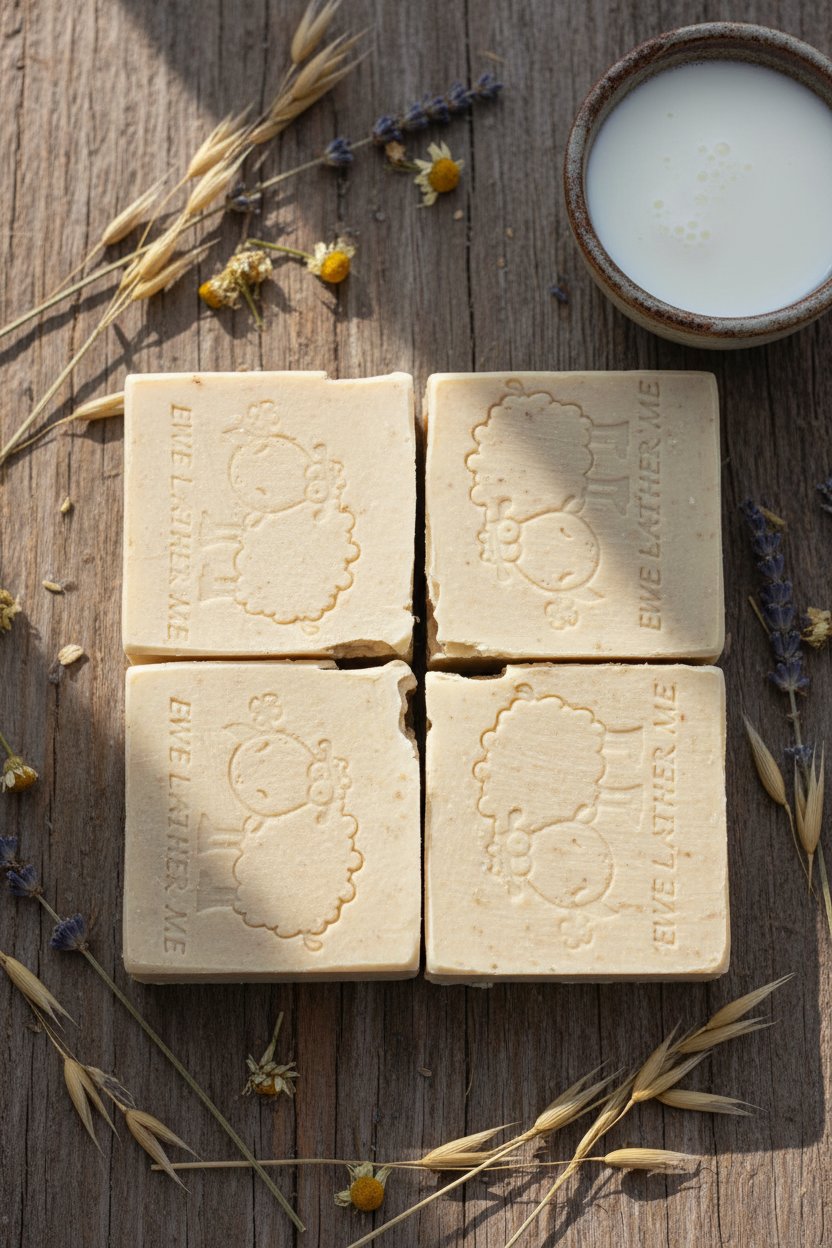
[Our The Udder Bar is built on exactly this idea](/products/the-udder-bar): grass-fed tallow with olive and castor oil, no fragrance, no additives. It is the bar we point people toward when their skin reacts to everything else.

Sheep Milk Soap for Sensitive Skin: What to Expect
Sheep milk soap for sensitive skin offers a creamy, low-foam lather and a gentler cleanse than detergent-based washes. The milk brings lactic acid and natural fats that leave skin feeling conditioned rather than squeaky.
Unscented Camel Milk Soap Bar →

What to expect in practice: a softer bar that wears faster than a hard tallow bar, a mild creamy scent if the bar is unfragranced, and no sting on broken skin.
Fragrance-Free and Gentle Cleanser Selection: A Product-Label Checklist
Fragrance-free and gentle cleanser selection starts with the ingredient list, not the front of the pack. "Natural," "pure" and "gentle" are marketing words; the ingredients tell you what you are actually buying. Work through this checklist before you buy:
- The words "fragrance" or "parfum" do not appear anywhere in the list
- No essential oils listed if your skin is currently flaring
- No sodium lauryl sulfate near the top of the list
Our Unscented Camel Milk Soap Bar at $8.95 passes every line on that list: fragrance-free, made with olive oil, coconut oil, shea butter and kaolin clay, and gentle enough that we also recommend it for babies.
Ingredients and Products to Avoid, Plus Natural Soap Safety and Allergy Risks
Natural soap safety is not automatic. Botanicals cause contact allergies, and "chemical-free" claims are meaningless because water is a chemical. The real risks are fragrances, essential oils, harsh surfactants and abrasive exfoliants, all of which can irritate plaques or trigger a flare.
Ingredients to avoid on psoriasis-prone skin
- Fragrance and parfum: the most common cause of contact allergy in cosmetics; avoid even in "naturally scented" bars.
- Strong essential oils: peppermint, eucalyptus, tea tree and citrus oils can sting broken skin and trigger contact dermatitis.
- Harsh surfactants: sodium lauryl sulfate near the top of the list strips lipids and leaves skin tight.
How to patch test properly
Patch test every new bar on your inner forearm for three days before using it in the shower. Apply a small amount to a coin-sized area, rinse, and check for redness, itching or stinging at 24, 48 and 72 hours. A reaction can be delayed, so do not skip the third day. If you react, stop using the bar and note the ingredient list so you can avoid similar products.
Evaluating labels and claims
Work through this checklist before you buy:
- The words "fragrance" or "parfum" do not appear anywhere in the list
- No essential oils listed if your skin is currently flaring
- No sodium lauryl sulfate near the top of the list
Stop and see a doctor if plaques spread quickly, crack and bleed, or show signs of infection such as warmth or pus. Soap is at-home care, not treatment.
Practical Use Instructions and Bathing Routine for Flare Management
Flare management comes down to a short, lukewarm routine repeated consistently. Follow these steps:
- Keep showers to five to ten minutes in lukewarm water.
- Lather a gentle bar in your hands and apply with palms, not the bar itself.
- Rinse thoroughly and pat dry with a soft towel; never rub.
- Apply a moisturiser within three minutes of drying, while skin is still damp.
- Use coal tar or salicylic acid bars two or three times a week, not daily.
- Wash clothing and bedding with a fragrance-free detergent.
- Keep scratching and picking to a minimum; trim nails short.
Soothing Scalp & Face bar
A dermatologist's guidance on psoriasis skincare echoes this order: gentle cleansing, immediate moisturising, and consistency. None of it is dramatic. All of it helps.
Managing psoriasis takes patience, and the right cleanser makes the daily routine easier rather than adding another variable to worry about. Ewe Lather Me makes handcrafted, fragrance-free bars on our Western Australian farm using tallow, sheep milk and olive oil, with no synthetic additives and no scent to aggravate reactive skin. Start with The Udder Bar or the Unscented Camel Milk Soap Bar or Soothing Scalp and Face barand see how your skin responds. Shop Ewe Lather Me and give your routine a gentler foundation.
